
Natural Gas Leak Detector: Essential Safety Tech for Industry & Home
Discover how natural gas leak detectors enhance safety across industries and homes. Learn about technology, applications, market trends, benefits, and future...

Introduction
Natural gas is a widely used energy source, powering homes, industries, and businesses worldwide. Despite its efficiency and cost-effectiveness, natural gas poses significant safety risks if leaks go undetected, leading to potential explosions, fires, or health hazards. This is where the Natural Gas Leak Detector becomes indispensable.
In this article, we will explore the core technology behind natural gas leak detectors, their real-world applications, current market trends, benefits, challenges, and future outlook. Whether you’re a homeowner, industry professional, or safety enthusiast, understanding these devices is crucial for enhancing safety and preventing disasters.
Technology and Concept Overview
A Natural Gas Leak Detector is a device designed to sense the presence of natural gas leaks, primarily methane, in indoor and outdoor environments. Natural gas is colorless and odorless, which complicates leak detection without specialized equipment. To combat this, companies add an odorant called mercaptan, giving the gas a distinctive sulfur-like smell for easier human detection. However, relying solely on smell is insufficient for early warning, especially in large or industrial settings.
Natural Gas Leak Detectors work using several technologies:
- Semiconductor sensors: Detect changes in electrical resistance when exposed to gas molecules.
- Electrochemical sensors: Generate an electrical current when natural gas interacts with specific chemicals inside the sensor.
- Infrared sensors: Use absorption of infrared light to identify the presence and concentration of methane gas.
Each technology offers different sensitivity levels, response times, and cost points. For instance, infrared sensors are highly accurate and often used in industrial applications, while semiconductor sensors are popular in residential detectors due to affordability.
Industry Applications & Use Cases
The versatility of Natural Gas Leak Detectors spans multiple sectors, from residential homes to heavy industries.
- Residential Safety: Homeowners use compact, wall-mounted detectors to monitor gas appliances like stoves and heaters, providing early warnings to prevent accidents. Leading brands like Kidde and First Alert have popularized these devices.
- Industrial Facilities: Chemical plants, refineries, and power plants utilize advanced fixed gas detection systems integrated into their safety protocols. For example, ExxonMobil installed infrared gas detectors across its refineries to identify leaks promptly, reducing downtime and enhancing worker safety.
- Commercial Buildings: Restaurants and hotels implement portable or fixed detectors to comply with safety regulations and protect patrons and staff.
- Utility and Pipeline Monitoring: Gas utilities deploy mobile leak detection units and drones equipped with sensors to inspect pipelines, mitigating risks of catastrophic failures and environmental damage.
These use cases highlight the critical role of gas leak detectors in preventing disasters and ensuring regulatory compliance.
Market Trends & Growth Drivers
The global market for natural gas leak detectors is experiencing robust growth, driven by increasing natural gas consumption and heightened safety regulations. According to MarketsandMarkets, the gas detection market is projected to grow at a compound annual growth rate (CAGR) of around 6% between 2023 and 2028.
Key market growth drivers include:
- Stringent Safety Regulations: Governments worldwide are enforcing mandatory gas detection systems in residential and industrial buildings.
- Rising Natural Gas Usage: Natural gas is preferred for its cleaner-burning properties compared to coal and oil, boosting demand for safety solutions.
- Technological Advancements: Innovations, such as IoT-enabled detectors and wireless systems, are enhancing detection accuracy and real-time monitoring capabilities.
- Increasing Industrialization: Expanding oil & gas, chemical, and manufacturing sectors require sophisticated leak detection systems to protect assets and workers.
Moreover, the integration of artificial intelligence and machine learning for predictive maintenance is emerging as a prominent trend, enabling preemptive leak identification and reducing false alarms.
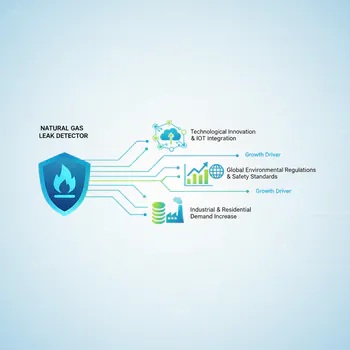
Market Trends & Growth Drivers
Benefits & Advantages
Investing in a high-quality Natural Gas Leak Detector offers multiple benefits for businesses and homeowners alike:
- Enhanced Safety: Early leak detection prevents fires, explosions, and health hazards caused by prolonged exposure to natural gas.
- Regulatory Compliance: Many regions require gas detection systems to meet occupational safety standards and insurance regulations.
- Cost Savings: Detecting leaks early reduces wastage of gas, lowering utility bills and minimizing repair costs from damage or downtime.
- Peace of Mind: Automated alerts and monitoring systems offer continuous protection, especially in unattended or hazardous environments.
- Competitive Advantage: For industries, demonstrating robust safety infrastructure builds trust with clients, regulators, and employees.
Case studies show that companies implementing advanced gas leak detectors have reduced incident rates by up to 40%, underscoring the devices’ strong ROI potential.
Challenges & Future Outlook
Despite their benefits, Natural Gas Leak Detectors face several challenges. Sensor accuracy can be affected by environmental factors such as humidity, temperature variations, and interference from other gases. False alarms can cause operational disruptions, while sensor maintenance and calibration add to costs.
To address these issues, manufacturers are focusing on:
- Multi-sensor Integration: Combining different sensor types to improve detection reliability.
- Smart Technologies: Leveraging AI and cloud connectivity for remote monitoring, predictive analytics, and reduced false positives.
- Miniaturization and Portability: Developing compact, user-friendly detectors for easy deployment.
Looking to the future, the market is expected to embrace more sophisticated IoT-enabled systems capable of integrating with building management and industrial control systems. Additionally, advancements in drone-based leak detection and autonomous robots will revolutionize pipeline inspections and safety audits.
Conclusion
In conclusion, the Natural Gas Leak Detector remains a vital technology for safeguarding lives, assets, and the environment amid growing natural gas usage. By understanding the underlying technologies, industry applications, market dynamics, and challenges, stakeholders can make informed decisions about the best detection solutions for their needs.
As innovations continue to enhance accuracy and usability, the adoption of natural gas leak detectors will become even more widespread. Investing in these devices today not only ensures compliance and safety but also positions businesses and homeowners to benefit from future advancements in gas leak detection technology.
Need More Details on Market Players and Competitors?